The layer that does not get built
Existing tools, used differently


Right now, thirteen crew members are available at Poole Lifeboat Station. The tide is falling on springs, next low water at 16:25. Wind is south-west at 10 knots, gusting 19. Sea temperature is 10.9 degrees. Wave height 1.1m, swell 0.84m. Douglas sea state three — slight seas. The inshore lifeboat is at the station.
I know all of this because I built a system that monitors it. It runs on a Home Assistant Green, a simple home automation server that costs just ninety pounds. I built it iteratively, with Claude, over a few weeks. Each piece took hours, not months.
I have been a volunteer crew member at Poole for four years. Before my current secondment to Gravitee, I spent nine years as Head of Data at the RNLI, leading an 85-person department. I know what the institution builds when it commits resources. I also know what does not get built, because the cost never justifies it for a single station.
Other volunteers have almost certainly built similar things and not written about them. This is a claim about the cost. Ninety pounds. A few weeks of evenings. Tools that already existed.
The Home Assistant had also been running for three years before the RNLI layer arrived. Lights, heating, EV charger, energy management. The operational layer grew on top: crew availability, exercise calendar, lifeboat tracking via AIS (the maritime vessel tracking system), tide predictions computed offline from local harmonic constants, and marine conditions from three independent sources.
When a shout comes in, the callout automation fires within seconds. It checks three things before I leave the house: the car battery, the phone battery, and the watch battery. If it is cold, it pre-warms the Tesla. If it is dark, it turns on the driveway and porch lights. It sends a phone briefing with the current environmental conditions and tide state. The briefing is not generic. It is contextual.
A geo-fence around the lifeboat station detects when I arrive, whether I drove, cycled, ran or was dropped off — five different location sources, any one sufficient. When I am at sea, a GPS tracker reports my position every thirty seconds over a web socket. Every fifteen minutes, the system sends Laura (my wife) a check-in: which named area of Poole Harbour I am in, distance and bearing from the station, speed in knots, and which lifeboat I am on — determined by comparing my GPS position against the AIS-tracked positions of both inshore lifeboats. When I start heading back, it computes an ETA and adds fifteen minutes for washdown. That is what she actually wants to know: not when the boat gets back, but when I will be home or if I am around to collect the kids from school.
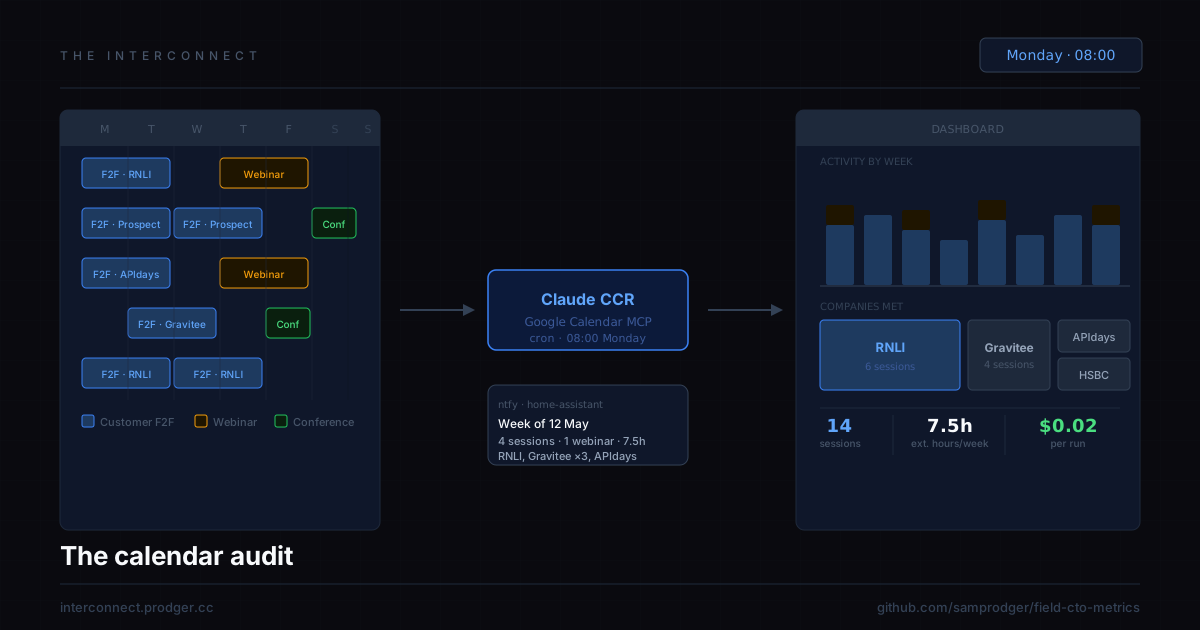
The exercise calendar integration runs the other direction too. The system scrapes an exercise planning system daily, finds exercises where I am booked, and creates calendar events. Those events drive the exercise window flag. When the geo-fence detects a launch during an exercise window, the system logs it as an exercise. Outside the window, a shout. Previously, telling exercises from real shouts in any personal log meant checking the calendar by hand. No manual input at any stage.
On startup and every Monday morning, it runs a health check, scanning logs for errors and alerting if anything has drifted. Every morning, a daily briefing. Every Monday at seven, a weekly snapshot. Thursday evenings, a pager test reminder. It auto-commits its own configuration to Git every night at three, keeping a full rollback history. Home Assistant Green is designed for continuous unattended operation — state persists across power cycles, automations restart on recovery, and a watchdog keeps critical processes alive. I do not think about it. It runs.
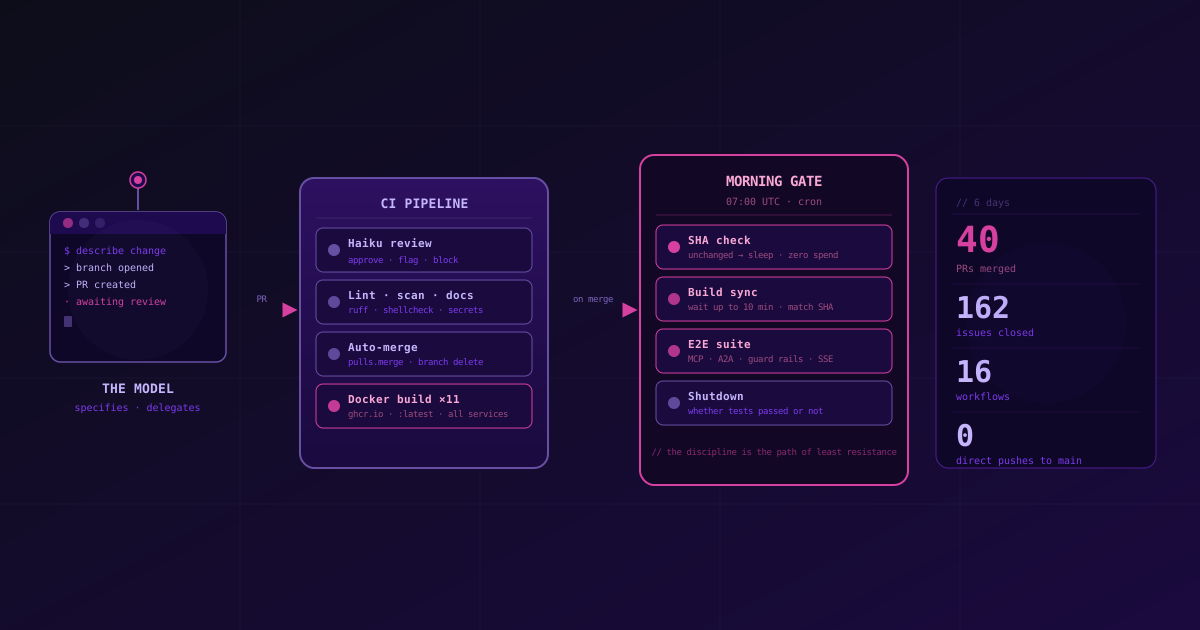
I have a background in data engineering, application development and machine learning. I have built production systems. What changed was not the ability to build; it was the economics of building things too small to justify as projects but too difficult to be an hour or so out of Family time. I described what I needed. Claude wrote the YAML automations, the JavaScript for the custom dashboards, the harmonic tide calculations, the geo-fence logic, the GPS distance tracking, and the notification chains, which I tested and validated. Moving from a human as the builder to a human as the architect and orchestrator. Each conversation produced a working piece. The pieces are composed into a system. The iteration cycle was minutes, not sprints.
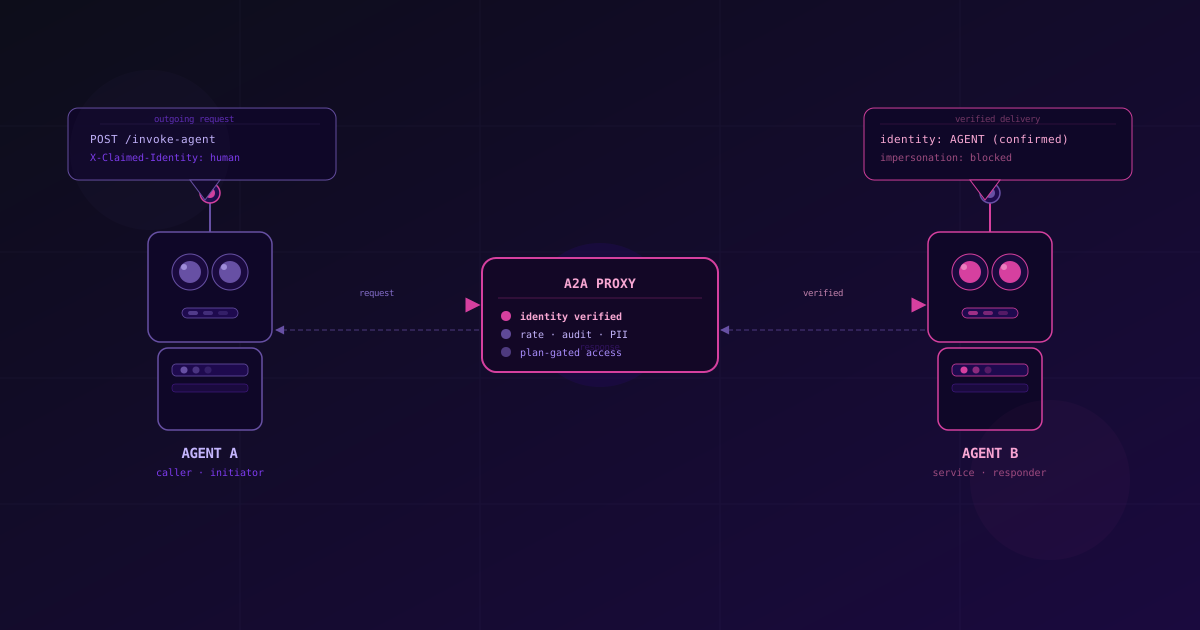
The RNLI centrally builds and maintains a dedicated web app as a callout and messaging system that serves 238 stations alongside the pager network. Gravitee governs the APIs that connect it. That architecture is proper engineering, and it should be. I helped build it. But RCAMS serves every station. It cannot and should not be customised for what one crew member at one station needs at three in the morning.
That is the layer that does not get built. Station-level operational awareness that exists today as lived experience, phone calls, and someone walking to the quay. The tide state, the crew count, the sea temperature, and the wind at the harbour entrance. Knowledge held in heads or dispersed systems. Not because it is unimportant. Because no one would commission a project to systematise it for a single volunteer station.
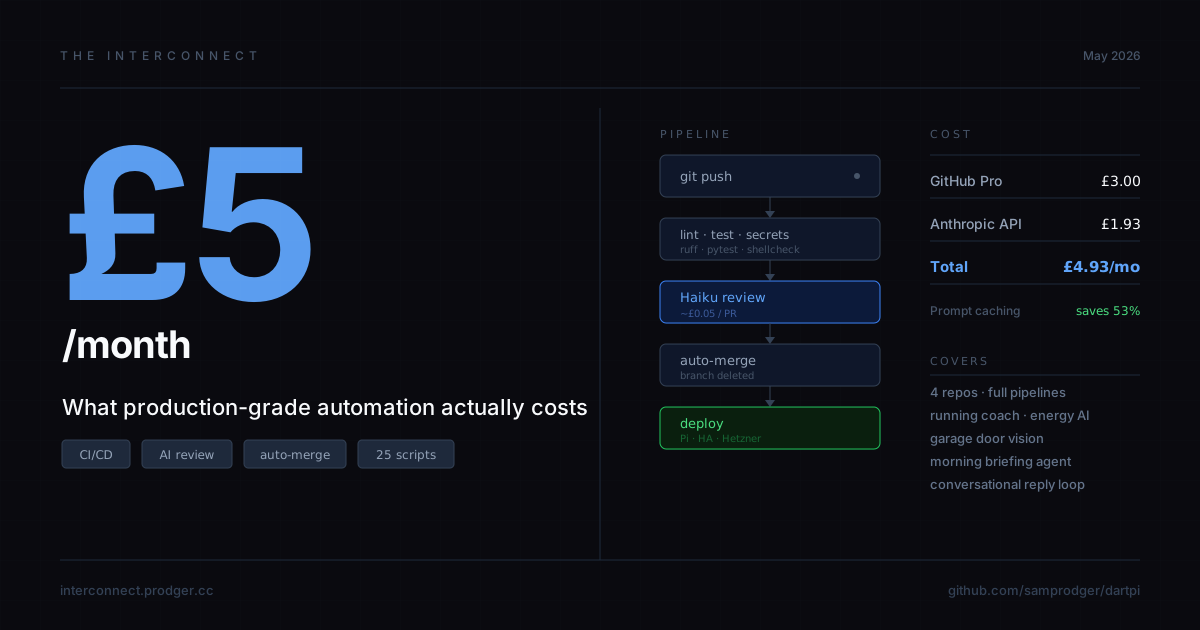
Ninety pounds and a few weeks of conversations are not a project. It is not a budget line. But the result is a live system that tracks crew availability, monitors marine conditions around the clock, computes tides without an internet connection, follows both lifeboats via AIS, briefs me when a shout fires, tracks my position at sea, and tells my wife which boat I am on and when I will be home.
None of these tools is new. Home Assistant has been around for over a decade. Cloudflare Tunnels are free. AIS data is open. The Met Office API is public. What changed is the cost of assembling them. Claude does not charge a day rate. It does not need a requirements document. It does not take a week to context-switch into your problem.
This is not an argument against enterprise architecture. Governance belongs in the infrastructure. The previous three articles in this publication make that case. But the layer beneath that, the frontline tooling that sits between what an organisation provides and what a volunteer actually needs, is now within reach of the people who need it. Not just people with a data background. The tools are accessible. The cost is low. The barrier is the assumption that it requires more than it does.
The question is not what I built. The question is what every other volunteer-led team, every small charity, every community first responder group could build if they knew the economics had changed. Some already have. Most have not.
Thirteen crew are available at Poole right now. The tide is falling. The wind is south-west at 10 knots. The inshore lifeboat is at the station. It costs less than a train ticket to London to know all of this.
Sam Prodger is Field CTO at Gravitee and a volunteer crew member at Poole Lifeboat Station. He spent nine years as Head of Data at the RNLI.
Continue this conversation
Open a pre-loaded prompt in your preferred AI. Edit it before you send.
Continue in Claude Continue in ChatGPT Continue in Grok Continue in PerplexityPre-loaded with context from this article. Opens in a new tab.